Ayurveda
Ayurveda is the traditional medicine of India; its name roughly means ‘knowledge of life’. It focuses on diet, daily rhythm and lifestyle, supplemented by oil massages, herbal preparations and cleansing treatments. Treatment is tailored to each person’s constitution.
- therapists
- 2
- session length
- 60–90 min
Therascout does not diagnose. Have new, severe or persistent complaints checked by a doctor first. Emergency: 144
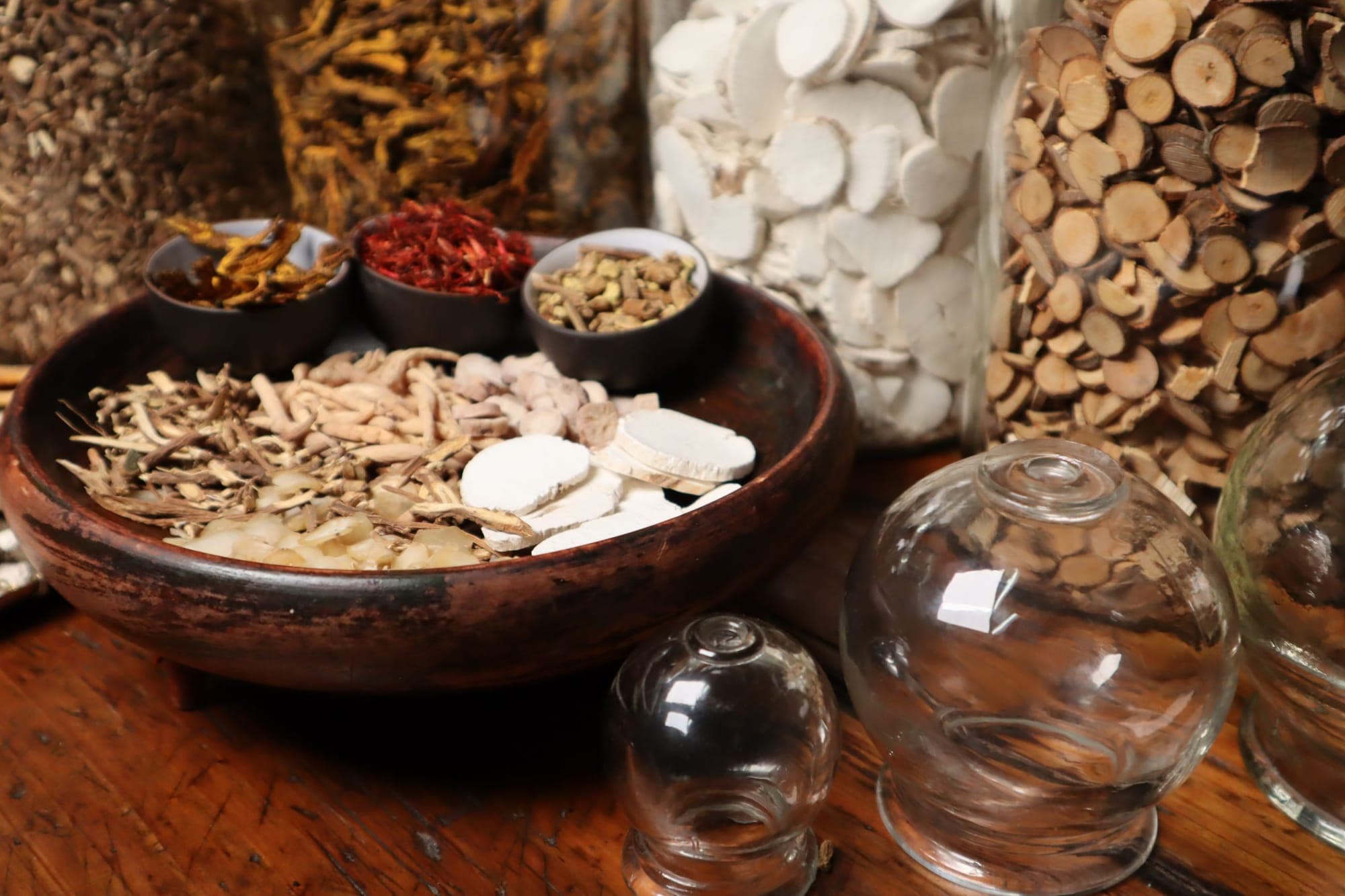
Origin and approach
Ayurveda has developed in India over more than 2,000 years and is still widely used there today. It describes three basic forces, the doshas Vata, Pitta and Kapha, whose balance is said to mean health. This model is traditional and has not been scientifically proven.
What a session is like
Length: 60–90 min- In the first consultation, the therapist asks about your complaints, diet, sleep and daily life.
- An Ayurvedic diagnosis often includes feeling your pulse and looking at your tongue and skin.
- You receive advice on diet and daily routine, and sometimes herbal preparations.
- A treatment session often includes a full-body massage with warm oil (abhyanga) or another application.
Ayurveda: what is it used for?
- Digestive complaints such as feeling overfull or bloated.
- Stress and wanting a calmer daily routine.
- Exhaustion and ongoing fatigue.
- Skin problems.
For these uses Ayurveda relies mainly on tradition; good studies are largely lacking.
How well is the effect supported?
Complaints for which this method is commonly used, sorted by the state of research. The rating shows how well the effect is supported, not whether it will help you.
What do the dots mean?How to read the rating
- Established
- recommended in guidelines, well studied
- Some evidence
- effect shown in studies, with limitations
- Limited evidence
- few or weak studies
- Traditional use
- used, but hardly studied
The rating covers the research, not the therapist.
- Traditional use
Digestive complaints
- Traditional use
Exhaustion and fatigue
- Traditional use
Skin problems
- Traditional use
Stress
Therapists: Ayurveda
Costs and health insurance
- Basic insurance
- only with doctors who hold the relevant certificate.
- Supplementary insurance
- often 50–80% with EMR- or ASCA-recognised therapists, often up to an annual maximum.
- Your insurer
- Each profile shows which insurers recognise the therapist.
- Price per session
- Practices set their own prices; you can see them in each profile.
Good to know
- Ayurveda usually means support over several weeks; intensive treatments such as panchakarma often last one to three weeks.
- Heavy metals such as lead or mercury have been found in some Ayurvedic preparations from abroad; buy only from controlled sources and tell your doctor what you are taking.
- Herbal preparations can interact with medication; during pregnancy, for children and with chronic illnesses, talk to your doctor first.
- Have new or severe symptoms checked by a doctor first; Ayurveda does not replace medical treatment.
Training and recognition in Switzerland
Switzerland has a federal diploma for naturopaths specialising in Ayurvedic medicine; depending on the canton, a licence to practise is also required. Ayurvedic massages and advice are also offered as complementary therapy. Basic insurance does not pay for Ayurveda; many supplementary insurance policies contribute, usually only with EMR or ASCA registration.