
Cabinet Chevalley
- 5.0(2)
- Geneva
- Languages: fr
Tui Na massageTraditional Chinese Medicine (TCM)Acupuncture
EMREGK therapist registerSwiss federal diploma
- Price
- CHF 69–145
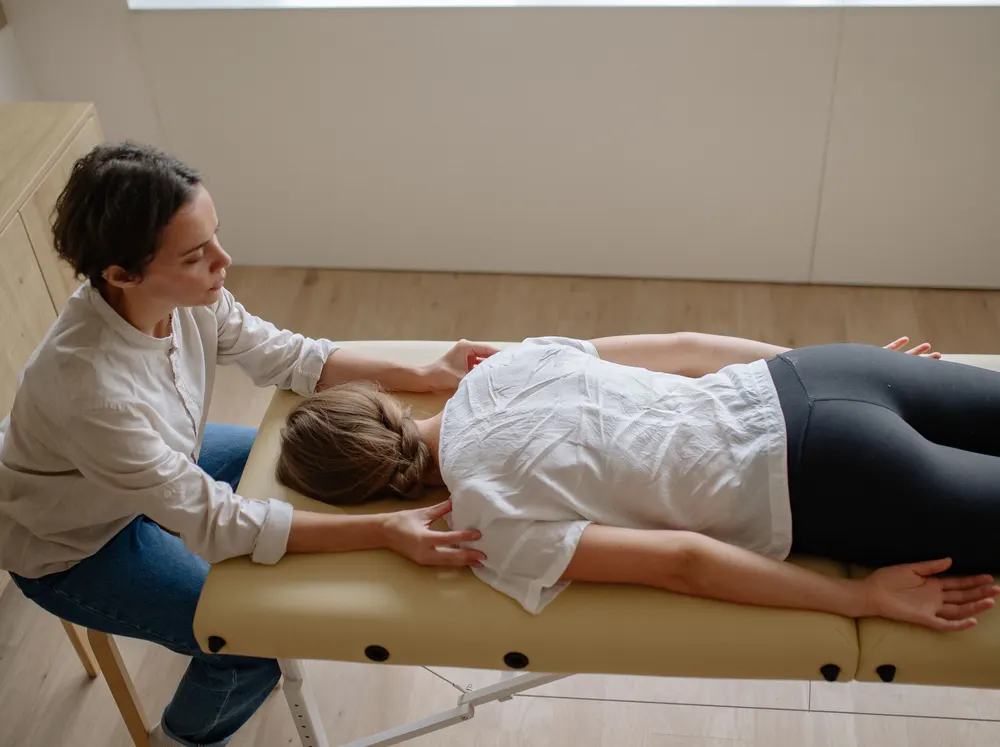
Tui Na is a form of massage from Traditional Chinese Medicine. Its name roughly means ‘push and grasp’. Using hands, fingers and elbows, the therapist presses, kneads, rubs and moves the body, often through clothing or a cloth.
Therascout does not diagnose. Have new, severe or persistent complaints checked by a doctor first. Emergency: 144
Tui Na has been used in China for centuries, including in hospitals. The techniques follow the channels and acupuncture points of TCM and aim to support the flow of qi. From a Western point of view, like other massages, it mainly addresses muscles, joints and relaxation.
There are still few reliable studies for any of these uses.
Complaints for which this method is commonly used, sorted by the state of research. The rating shows how well the effect is supported, not whether it will help you.
The rating covers the research, not the therapist.
Cabinet Chevalley

Praxis Baumann
Tui Na is part of TCM training, for example for the federal diploma as a naturopath specialising in TCM, and is also taught in dedicated courses. Basic insurance does not pay for it; many supplementary insurance policies contribute, usually only if the therapist is registered with EMR or ASCA.