Skip to content
Therascout

Language

Autogenic training

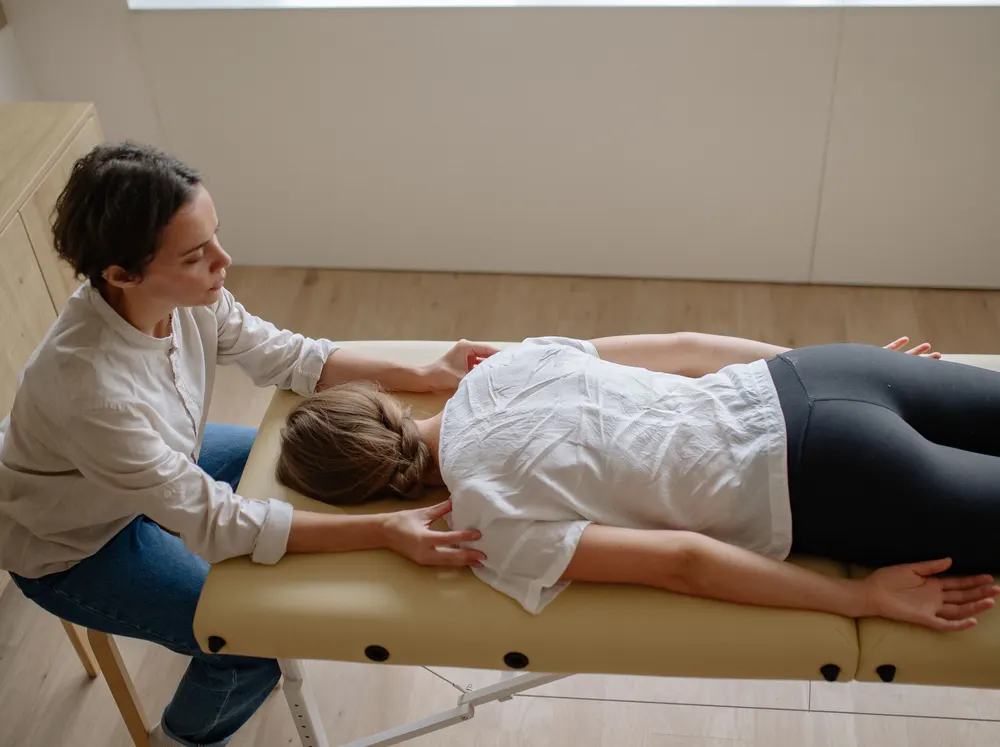
Autogenic training is a relaxation method in which you bring yourself into a relaxed state using short, set phrases such as “My right arm is very heavy” or “My breathing is calm”. The basic level has six exercises on heaviness, warmth, heart, breathing, abdomen and forehead. Once learned, you can use it anywhere on your own.

therapists
5
session length
45–60 min

Therascout does not diagnose. Have new, severe or persistent complaints checked by a doctor first. In an emergency: 144

Origin and approach

The Berlin neurologist Johannes Heinrich Schultz developed autogenic training in the 1920s from his experience with hypnosis. The idea is that focused self-relaxation calms the autonomic nervous system, which controls breathing, heartbeat and digestion. Reviews show positive effects on stress and indications for tension headaches, sleep problems and anxiety; the quality of the studies is partly limited.

What a session is like

Length: 45–60 min
  1. Autogenic training is usually learned in a course lasting 8 to 10 weeks, in a group or one to one.
  2. In each session you learn a new exercise, which you try sitting or lying down.
  3. At the end of each exercise you “come back”: move your arms firmly, breathe deeply, open your eyes.
  4. Between sessions you practise at home two or three times a day for a few minutes.

Autogenic training: what is it used for?

  • Stress and tension; there are positive studies here.
  • Sleep problems.
  • Tension headaches.
  • Anxiety and inner restlessness.
  • For sleep problems, headaches and anxiety the evidence is limited.

How well is the effect supported?

Complaints for which this method is commonly used, sorted by the state of research. The rating shows how well the effect is supported, not whether it will help you.

We do not have a rating by complaint for this method yet.

Therapists: Autogenic training

  • Portrait of Adrian Kälin, Psychotherapy in Lucerne

    Praxis Adrian Kälin

    Save

    Save Adrian Kälin?

    With a free account, your saved therapists, your compare list and your health insurer stay available on all your devices.
    Create account
    • 4.7(3)
    • Lucerne
    • Languages: de · en
    • Online
    PsychotherapyHypnotherapyAutogenic training
    ASCABasic insurance (KVG)
    Price
    CHF 93–185
    Next appointment
    Available from tomorrow
  • Portrait of Aurélie Dubois, Neurofeedback in Geneva

    Cabinet Dubois

    Save

    Save Aurélie Dubois?

    With a free account, your saved therapists, your compare list and your health insurer stay available on all your devices.
    Create account
    • 5.0(2)
    • Geneva
    • Languages: fr · en · de
    NeurofeedbackHypnotherapyAutogenic training
    EMR
    Price
    CHF 72–160
  • Portrait of Chloé Perrin, Patient education programme in Geneva

    Cabinet Perrin

    Save

    Save Chloé Perrin?

    With a free account, your saved therapists, your compare list and your health insurer stay available on all your devices.
    Create account
    • 5.0(2)
    • Geneva
    • Languages: fr · en
    Patient education programmeHypnotherapyAutogenic training
    ASCA
    Price
    CHF 75–165
See all 5

Costs and health insurance

Basic insurance
usually not.
Supplementary insurance
often 50–80% with EMR- or ASCA-recognised therapists, often up to an annual maximum.
Your insurer
Each profile shows which insurers recognise the therapist.
Practice prices
See prices in each practice profile.
Recognitions explained →

Good to know

  • The effect depends on regular practice and often only shows after a few weeks.
  • With psychosis, severe depression or heart disease, ask your doctor first whether the method is suitable.
  • Autogenic training does not replace treatment; if you have suicidal thoughts, Die Dargebotene Hand is available around the clock on 143.

Training and recognition in Switzerland

Autogenic training is taught by doctors, psychologists, psychotherapists and therapists with relevant further training. Basic insurance generally does not pay for courses; some supplementary insurers contribute, for example through health promotion contributions or with EMR or ASCA registration.