Wraps and compresses
Wraps and compresses are cloths or pads, warm or cold, damp or dry, placed on or wrapped around a part of the body. They often contain additions such as medicinal herbs, hay flowers, quark, onions, mustard or essential oils. Well-known examples are calf wraps, neck wraps and warm compresses on the abdomen.
- therapists
- 2
- session length
- 30–60 min
Therascout does not diagnose. Have new, severe or persistent complaints checked by a doctor first. Emergency: 144
Origin and approach
Wraps are old home remedies that were systematised in the 19th century by Vincenz Priessnitz and Sebastian Kneipp, among others; today they are common in naturopathy and anthroposophic nursing. The idea is that warmth or cold and the additions act through the skin on blood flow, muscle tension and wellbeing, and the rest afterwards is part of it. There are few studies; the use is based mainly on experience.
What a session is like
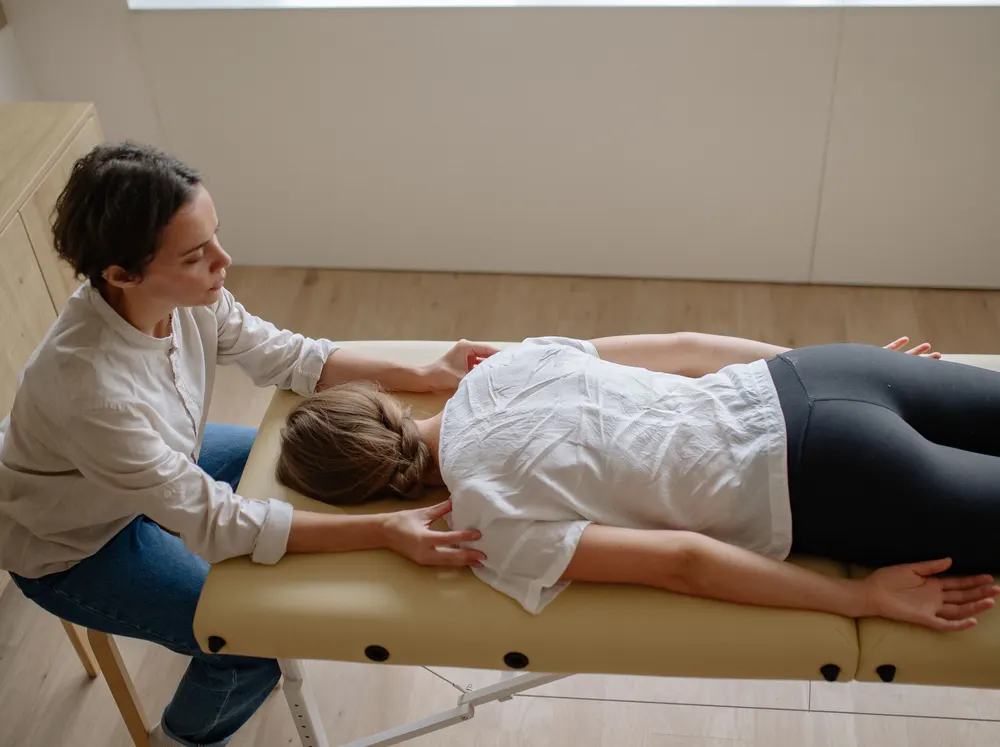
Length: 30–60 min- In the conversation, the therapist checks your complaints and any allergies.
- The wrap is prepared and applied in several layers: an inner cloth with the addition, a middle cloth and a warming outer cloth.
- You rest for 20 to 30 minutes, warmly covered.
- You often learn to apply the wrap yourself at home.
Wraps and compresses: what is it used for?
- Colds and infections, for example with neck or chest wraps.
- Digestive complaints, with warm compresses on the abdomen.
- Muscle tension.
- Restlessness and sleep problems.
For these uses wraps rely on tradition and experience.
How well is the effect supported?
Complaints for which this method is commonly used, sorted by the state of research. The rating shows how well the effect is supported, not whether it will help you.
What do the dots mean?How to read the rating
- Established
- recommended in guidelines, well studied
- Some evidence
- effect shown in studies, with limitations
- Limited evidence
- few or weak studies
- Traditional use
- used, but hardly studied
The rating covers the research, not the therapist.
- Traditional use
Digestive complaints
- Traditional use
Frequent infections
- Traditional use
Muscle tension
- Traditional use
Sleep problems
Therapists: Wraps and compresses
Costs and health insurance
- Basic insurance
- only with doctors who hold the relevant certificate.
- Supplementary insurance
- often 50–80% with EMR- or ASCA-recognised therapists, often up to an annual maximum.
- Your insurer
- Each profile shows which insurers recognise the therapist.
- Price per session
- Practices set their own prices; you can see them in each profile.
Good to know
- Check the temperature: hot wraps can burn, especially in children, older people and with reduced skin sensation, for example with diabetes.
- Mustard, onions and essential oils can irritate the skin or cause allergies; not all essential oils are suitable for babies and young children.
- With high or lasting fever, fever in a baby, or shortness of breath, see a doctor first.
Training and recognition in Switzerland
Wraps and compresses are part of the training for naturopaths in Traditional European Medicine (OdA AM) and of anthroposophic nursing; shorter courses also exist. Basic insurance does not pay for them; supplementary insurers contribute depending on the policy, usually only with EMR or ASCA registration.