Qigong
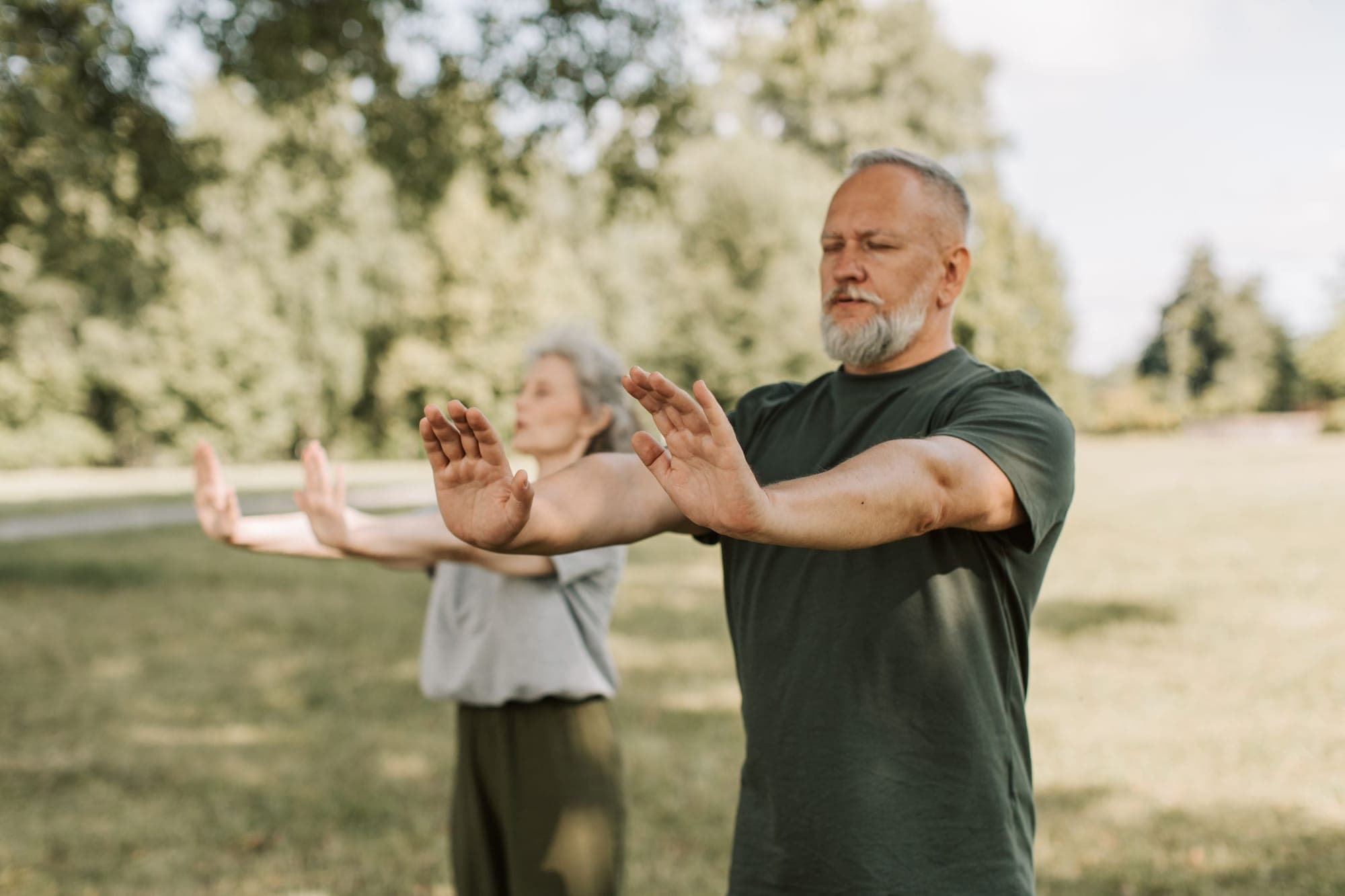
Qigong is an exercise method from Chinese medicine. Slow, flowing movements are combined with calm breathing and focused attention; some exercises are done standing still or sitting. Qigong is usually learned in classes and then practised on your own.
- therapists
- 2
- session length
- 60–90 min
Therascout does not diagnose. Have new, severe or persistent complaints checked by a doctor first. In an emergency: 144
Origin and approach
Qigong has a centuries-old tradition in China and is part of Traditional Chinese Medicine. In the traditional view it promotes the flow of life energy, qi; from a modern perspective it combines gentle movement, breath regulation and relaxation. Many studies, often small, suggest positive effects on stress, sleep and exhaustion; their quality is limited.
What a session is like
Length: 60–90 min- A class usually starts with a short settling-in and loosening exercises.
- You then learn and repeat sequences of exercises with guidance.
- It ends with a quiet phase in which you notice how you feel.
- You are given ideas for practising on your own for a few minutes each day.
Qigong: what is it used for?
- Stress and inner restlessness.
- Exhaustion and fatigue.
- Sleep problems.
- Chronic pain, as gentle exercise.
For these uses studies give some indications, but the evidence is limited.
How well is the effect supported?
Complaints for which this method is commonly used, sorted by the state of research. The rating shows how well the effect is supported, not whether it will help you.
We do not have a rating by complaint for this method yet.
Therapists: Qigong
- Next appointment
- No new patients
Costs and health insurance
- Basic insurance
- usually not.
- Supplementary insurance
- often 50–80% with EMR- or ASCA-recognised therapists, often up to an annual maximum.
- Your insurer
- Each profile shows which insurers recognise the therapist.
- Practice prices
- See prices in each practice profile.
Good to know
- Qigong is suitable for all ages and can also be practised with physical limitations, for example sitting down.
- Effects are most likely with regular practice; a course often includes 8 to 12 lessons.
- With dizziness, heart problems or severe pain, talk to your doctor first; qigong does not replace medical treatment.
Training and recognition in Switzerland
Qigong teachers and therapists complete private training, often over several years; qigong is also part of TCM training. Basic insurance does not pay for it; some supplementary insurers contribute to therapy or classes, usually only with EMR or ASCA registration.