
Skip to content
Therascout

Tai chi

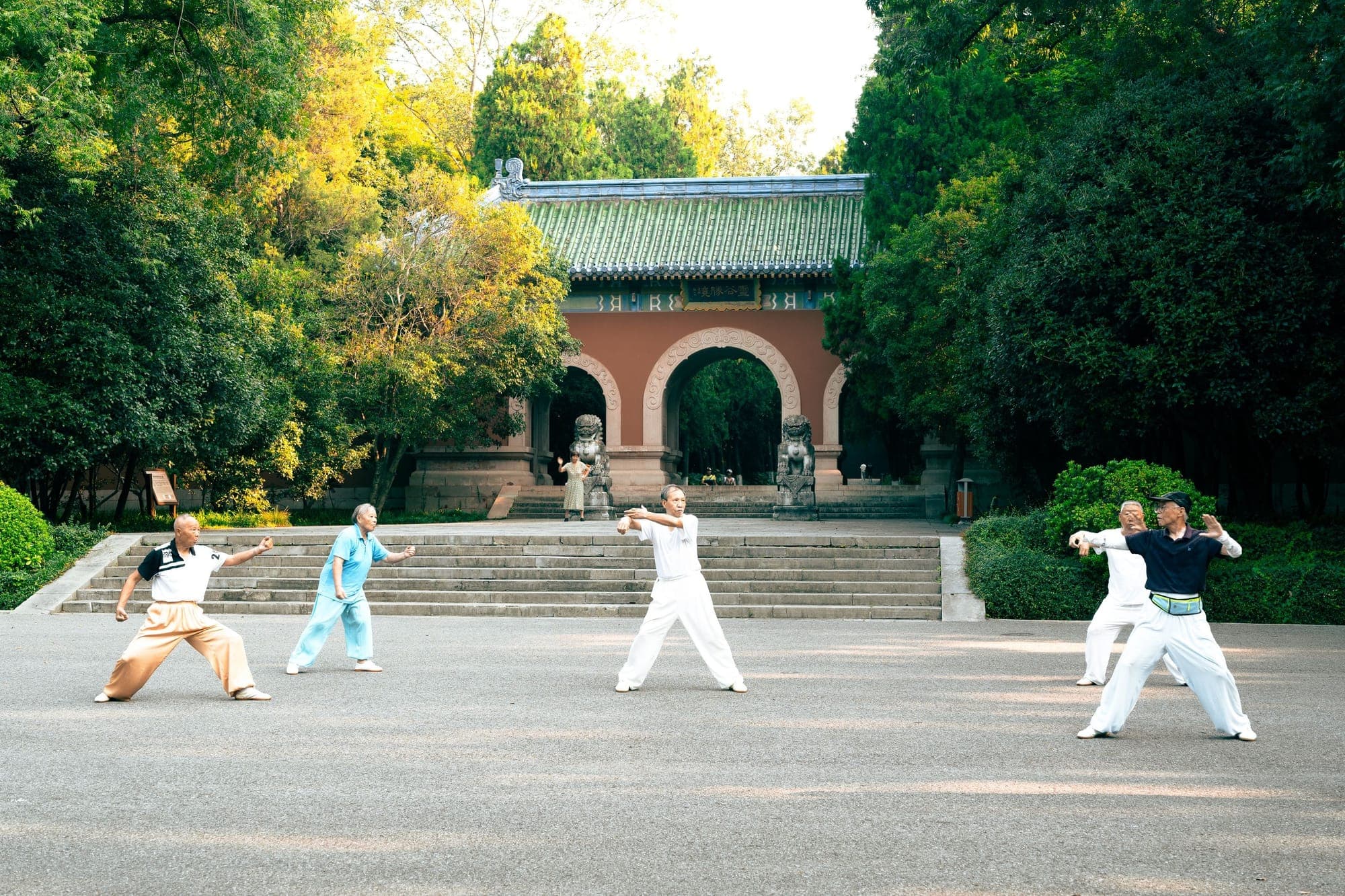
Tai chi (taijiquan) is a Chinese movement art made up of slow, flowing sequences, called forms, which originally come from martial arts. The movements are performed calmly, with conscious weight shifts and an upright posture. Tai chi trains balance, coordination, strength and concentration.

therapists
2
session length
60–90 min

Therascout does not diagnose. Have new, severe or persistent complaints checked by a doctor first. In an emergency: 144

Origin and approach

Tai chi originated in China and has been passed down for several centuries in different styles. Traditionally it combines martial art with ideas of yin and yang and the flow of qi; from a modern perspective it is gentle physical activity combined with mindfulness. The research is comparatively good: tai chi helps prevent falls in older people, and clinical guidelines recommend it for knee and hip osteoarthritis.

What a session is like

Length: 60–90 min
  1. A class usually begins with warm-up and loosening exercises.
  2. You learn individual movements of the form, which the teacher demonstrates and corrects.
  3. The sections you have learned are repeated in the group and linked together.
  4. To finish, you stand still for a few minutes and notice how you feel.

Tai chi: what is it used for?

  • Joint pain from knee and hip osteoarthritis; there are positive studies here.
  • Balance and preventing falls in older age.
  • Chronic pain and back pain; the evidence is limited.
  • Stress and sleep problems; here too there are indications but no firm evidence.

How well is the effect supported?

Complaints for which this method is commonly used, sorted by the state of research. The rating shows how well the effect is supported, not whether it will help you.

What do the dots mean?
Established
recommended in guidelines, well studied
Partly supported
effect shown in studies, with limitations
Limited evidence
few or weak studies
Hardly studied
used, but hardly or not studied

The rating covers the research, not the therapist.

  • Partly supported

    Joint pain

    The US rheumatology guideline explicitly recommends tai chi for knee and hip osteoarthritis. The studies are mostly small.

Therapists: Tai chi

  • Portrait of Andrea Ferrari, Tai chi in Mendrisio

    Tai Chi Ferrari

    • 5.0(2)
    • Mendrisio
    • Languages: it · en · de · fr
    Tai chiFeldenkrais method
    EMRASCA
    Price
    CHF 57–125
    Next appointment
    No new patients
  • Tai-Chi Müller

    • Bern
    Tai chi
    Next appointment
    No new patients

Costs and health insurance

Basic insurance
usually not.
Supplementary insurance
often 50–80% with EMR- or ASCA-recognised therapists, often up to an annual maximum.
Your insurer
Each profile shows which insurers recognise the therapist.
Practice prices
See prices in each practice profile.
Recognitions explained →

Good to know

  • Learning a form takes patience and several months; classes usually take place once a week.
  • Tai chi is suitable into old age; the movements can be adapted for knee or back problems.
  • With heart or balance problems, talk to your doctor first.

Training and recognition in Switzerland

Tai chi teachers train in private courses, often over several years; there is no state-regulated qualification. Basic insurance does not pay for tai chi; some supplementary insurers contribute to classes, for example through health promotion contributions or with EMR or ASCA registration.